|
|---|


Saturday, 23 July 2011

Monday, 4 July 2011

Saudi Arabia and Iran are nervous about the CIA coups in North Africa.
On 6 June 2011, Anissa Haddadi, at the International Business Times, asks: Are the Libyan rebels backed by Saudi Arabia or by Iran?.
According to Anissa Haddadi:
1. Obama asked Saudi Arabia to arm the rebels in Libya.
Apparently, Saudi Arabia has not armed the rebels.
2. Saudi Arabia prevented the rebel leaders from reaching Qatar, where they had meetings planned.
3. Iran is sympathetic to the "Islamic awakening" in Libya but opposes the Nato military strikes.
4. President Mahmoud Ahmadinejad has said: "The 'double standard' action of the Western countries in Bahrain and Libya and their silence towards the atrocities of the Zionist regime against the innocent Palestinians shows their contradictory performance in the world."
The supreme Leader Ayatollah Ali Khamenei has said: "Iran ... condemns the (NATO) military action in Libya."
~~
Friday, 24 June 2011
 Photo: AP
The Russian nuclear experts killed in the plane crash, in Russia, on 20 June 2011, helped design a nuclear facility in Iran.
Iranian nuclear scientists have in the past been involved in unexplained accidents and plane crashes.
Designer of Indian N-reactor killed in Russian plane crash
Sergei Ryzhov, the chief designer of the nuclear reactors built by Russia in foreign countries, including India, was among those killed.
The whole leadership of the designers units of Russia's state nuclear corporation was killed when the Tu-134 passenger plane crash landed in the northern republic of Karelia.
~~
Many thanks to C. for the link.
~~
Sunday, 5 June 2011
 Saudi troops head into Bahrain, March 2011.
The US government wants change in Bahrain.
"There will be no justice and no democracy until the royal family is gone."
(Elliott Abrams: Bahrain.)
The ruling family in Bahrain may not survive.
The mainly Shia protestors may yet topple the Sunni al-Khalifa monarchy.
This is important to both Shia Iran and Sunni Saudi Arabia.
Saudi Arabia and the United Arab Emirates have helped the Bahrain monarchy to crush dissent.
The Sunnis make up about 40% of the population of Bharain.
On 2 June 2011, The Economist reports ("The loathing persists") on the possibility that Bahrain will become like Iraq.
"The spectre of sectarian bloodletting in the manner of Lebanon and Iraq still frightens many people...
"Some Westerners are packing their bags...
"Banking, which once accounted for over a quarter of Bahrain’s wealth, is searching for safer climes."
The Economist reports (The loathing persists) on the Sunni-Shia divide.
"Teachers arrange 'thank you, Saudi' days in schools.
"The Bahraini king's men have razed dozens of Shia shrines and put up billboards on main roads near Sunni-populated suburbs, depicting nooses dangled over the heads of Shia leaders.
"Hundreds of public-sector Shias have been suspended, to the delight of Sunni immigrants from such places as Pakistan and Bangladesh seeking promotion.
"The Labour Market Regulatory Authority has purged the private sector of Shias suspected of sympathy with the protesters...
"Parliament has been stripped of many of its Shia representatives...
~~
Wednesday, 25 May 2011

Monday, 4 April 2011

In 2010, Wikileaks disclosed that Saudi Arabia's King Abdullah urged the US to attack Iran, describing Iran as a snake whose head should be cut off without any procrastination.[33]
In April 2011, we read of tensions between Saudi Arabia and Iran.
According to Iran's PressTV, 'Saudi Arabia seeks to annex Kuwait'
According to a top Iranian, Saudi intervention in Bahrain is considered 'occupation'.
Some Arabs see an Iranian conspiracy to target Kuwait and Bahrain (GCC countries)
Many thanks to C. for the links.
Saturday, 19 March 2011
 Website for this image
"An ex-CIA agent and counter-intelligence expert has revealed in a special report that Barack Obama has quietly appointed individuals who are friendly to radical Islam to key posts within the Administration." (Report - Obama quietly appoints Muslim Brotherhood to key posts.)
On 19 March 2011, Egyptians vote in a referendum on changes to the constitution.
On 17 March 2011, we read that, the constitutional changes will help the Muslim Brotherhood
According to the Financial Times: "The Muslim Brotherhood ... looks poised to emerge as the main beneficiary of new political arrangements to be put in place by Egypt's transitional military authorities."
Egypt's CIA-controlled generals seem to have decided to side with the CIA-controlled Muslim Brotherhood against the 'youth-led secular groups'.
"Some analysts and political activists said the Supreme Military Council ... may have decided that an alliance of conservative forces presents a better option for the future than that offered by the young secular groups." (the constitutional changes will help the Muslim Brotherhood)
Hossam Tammam, an analyst who specialises in Islamist groups, says "There are signs the military may have decided to bet on the Brotherhood as the biggest organised force on the street.
"The others (small parties and secular groups) may be seen by the army as representing an unwanted and radical transition to democracy." (the constitutional changes will help the Muslim Brotherhood)
The Muslim Brotherhood and Mubarak's National Democratic party "look set to dominate the next parliament." (the constitutional changes will help the Muslim Brotherhood)
The Brotherhood "is the only political group to have been represented on the panel of legal experts handpicked by the military that drafted the constitutional changes." (the constitutional changes will help the Muslim Brotherhood)
 Eisenhower in the Oval Office with members of Muslim Brotherhood (What Is the Muslim Brotherhood, and Will It Take Over Egypt ...)
Remember Iran, and compare the Shah with Mubarak.
According to this article: "The British, the Middle East and Radical Islam - Red Moon Rising":
"Prior to the British-sponsored massive public relations campaign on behalf of the Ayatollah, the government of the Shah was loved by the vast majority of the population...
"The Shah began to push forward a number of nationalist policies that increased his popularity at home but, in some cases, worried the Anglo-American Establishment.
"First, he signed petroleum agreements with ENI, the Italian oil company.
"Then in 1963 he pushed forward on a series of popular reforms that became known as the White Revolution.
"The Shah evolved into a nationalist whose path paralleled that of Nasser far too much for the Establishment's liking:
"He bought land from the upper classes and, along with the crown's own land, sold it back cheaply to tenant farmers, allowing over one a half million people to become land owners and ending the old feudal system.
"He allowed women the right to vote, and brought an end to the wearing of the veil, which were 'Westernizing' moves unwelcomed by the religious sector.
"He pushed forward on a $90 billion nuclear power program.
"He moved to shut down the lucrative opium industry that had been created during the days of British Empire control that had been running for a hundred years.
"The attack on the Shah's government came through the Muslim Brotherhood and through the mullahs and ayatollahs of Iran, supported and manipulated by British Intelligence..."
Radio Free Iran reportedly claimed that while at Qom Khomeini received a "monthly stipend from the British, and he is in constant contact with his masters, the British."
Notes http://www.redmoonrising.com/Ikhwan/BritIslam.htm
~
It would seem that the US and NATO prefer Moslem governments to be fundamentalist because fundamentalists are easier to control.
~
Monday, 31 January 2011
 US Chairman of the Joint Chiefs of Staff Admiral Mike Mullen is greeted by Egyptian Armed Forces Chief of Staff Lt. Gen. Sami Enan in Cairo on 14 February 2010. Mullen was on a weeklong tour of the region.
1. It would appear that the Egyptian military is taking its orders from Washington.
The military's "displays of support for the protesters were conspicuous throughout the capital.
"In the most striking example, four armored military vehicles moved at the front of a crowd of thousands of protesters in a pitched battle against the Egyptian security police defending the Interior Ministry." (Egyptian Military Does Little to Quash Protests)
The Egyptian army chief of staff General Sami Enan has been meeting U.S. defense officials in Washington. (US BACKS EGYPTIAN COUP)
Cairo by daniel.gene
When the CIA toppled Indonesia's Suharto it had the support of the key American-trained generals. (aangirfan: STAGED BY SPOOKS: FALL OF THE BERLIN WALL, ORANGE ... )
These Indonesian generals got their soldiers to dress up as students in order to carry out the rioting; the military transported criminal gangs into Jakarta; youths were paid to act as rioters.
When the May 1998 Jakarta riots took place, the uniformed military were invisible.
The tanks only appeared after the president had been fatally weakened.
Egyptians by agoork
2. Parts of Egypt are peaceful.
The organisers of the riots have concentrated on a relatively few key spots.
"The situation in the Red Sea resorts remain(s) calm."
Similarly, in Jakarta in May 1998, the military only had the resources to organise rioting in a few key areas of the city. (aangirfan: STAGED BY SPOOKS: FALL OF THE BERLIN WALL, ORANGE ... )


3. On 30 January 2011 we learn that Israel is denying reports of Israeli commandoes in Cairo to help topple Mubarak
Israel sees Egypt as its main Arab enemy. (WHAT THE USA AND ISRAEL REALLY THINK ABOUT EGYPT)
The Iranian media has reported that Israeli secret agents and Commandos are among the protestors and that they are deliberately creating riots and preventing the city from returning to order.
According to the Iranians, Egypt's Vice-President Suleiman is working for Israel.
Egypt by upyernoz
On 29 January 2011, Hamad Subani wrote: "Tunisia & Egypt: Manufactured Crisis? "
Hamad Subani looks at some history:
1. During World War I, it was the British who organised the Arab revolts.
The British did this in order to break up the Turkish Ottoman Empire, which controlled most of the Middle East.
(This Turkish empire included Palestine and oil rich Iraq, both of which certain British leaders wanted to control.)
2. The Western powers decided which families were to be the nominal rulers of the Arab countries.
"The rulers of Jordan now exclusively marry into Western ruling elite. Libya has ... close secret ties with the British ruling elite."
(There is a suggestion of a link to Lockerbie -Are Tunisia and Egypt facing real unrest or a manufactured crisis? )
3. The present unrest "is very region-specific.
"It does not seem to be spreading to places ... which are already under the thumb of the Powers That Be."
4. "There is the case of German/Swedish snipers/hunters being caught in Tunisia."
5. "The Western media appears to be magnifying the crisis."
Egyptians by upyernoz
6. "Mohamed ElBaradei is already being touted as a new leader for Egypt.
"ElBaradei is a trustee of the International Crisis Group.
"Another board member of this group is Zbigniew Brzezinski.
"George Soros sits on the executive committee."
Alexandria by ayman6681
7. The Iranian Revolution of 1970 was "on the lines of an Islamicized French Revolution (mob rule, executions, secret courts, destruction and displacement of the former ruling class etc.)
"The revolutionaries managed to create a powerful police state that now spearheads the clash of civilizations rhetoric prescribed by the Powers That Be.
"The secret ties of the Western ruling elite with some of the revolutionaries has been documented."
Little did Mossadegh and the Shah know that "the Powers That Be saw them only as temporary placeholders until Iran was consolidated under a new regime that was to play a critical role in advancing the 'Clash of Civilizations' agenda."
Reza Shah "turned over the police, intelligence and economic affairs of his country to his Western 'friends' who promptly set out to use them to create the conditions necessary for the revolution..." (See also: aangirfan: The Shah of Iran was toppled by the CIA and MI6?)
Cairo by nadeem_london
8. In 1970, 'an opportunist', Anwar Sadat, became President of Egypt.
In 1977, Sadat 'naively' opened up Egypt’s economy to the West.
"The World Bank moved in, insisting that he remove subsidies on food...
"What followed were the Bread Riots in which 800 Egyptians were killed and Sadat was almost overthrown..."
Sadat was assassinated in 1981.
"There were certain secretive and shadowy elements who coordinated the assassination..."
~~~
Are Tunisia and Egypt facing real unrest or a manufactured crisis?
The Federal Reserve as an Instrument of War
The case of the church made of Muslim bones
Ten Best Conspiracy Websites


Sunday, 23 January 2011


Friday, 21 January 2011
AN ISLAMIST TUNISIA WILL SUIT THE CIA, THE SAUDIS, IRAN & THE MAFIA.
0 comments Posted by VA at 11:39 CIA boss Panetta and friends.
Iran has welcomed the revolution in Tunisia.
What about the Islamists in Tunisia?
The Islamist movement has been at the forefront of Tunisia's protests
Will the Islamists be used by Iran, or Saudi Arabia or the CIA or the Heroin traders?
Iran, Saudi Arabia and the CIA all appear to have a philosophy that could be described as 'fascist'.

The mad Moslems and the CIA have another thing in common: heroin.
"It has been said that the ubiquitous Rafsanjani family and also Ayatollah Vaez-Tabasi ... are deeply involved in the drug trade..." (Opium, Brown Sugar & Mullahs in Iran « Plateau of Iran )
"The gossip on the street, going well beyond the observable facts, has the Rafsanjanis stashing billions of dollars in bank accounts in Switzerland and Luxembourg; controlling huge swaths of waterfront in Iran's free economic zones on the Persian Gulf; and owning whole vacation resorts on the idyllic beaches of Dubai, Goa and Thailand." (Millionaire Mullahs - Forbes.com) (Author of "Millionaire Mullahs" Shot Dead )
 Website for this image
1. In 1996, Tunisian Minister of Justice Sadok Chaabane said that Tunisian Islamists get their funding and political support from (1) Iran (2) Saudi Arabia.
(Justice Minister Describes Tunisia's Battle Against Islamist Takeover)
According to Chaabane, the 'Islamist' plan is to use Tunisia as "the gateway to its larger neighbors, Algeria and Morocco."
Tunisians belong to Sunni Islam, but Chaabane states that Tunisia's Islamist leaders will accept help from wherever they can find it.
Of course, some believe that the CIA sees Tunisia as its gateway into oil-rich Algeria and Libya.
And the CIA has been happy to use militant Moslems in Kosovo, Afghanistan and elsewhere.
2. Tunisia may now have a bigger problem with 'Islamist extremists' coming in from neighbouring Algeria.
In Algeria, war between the government and 'Islamists' has killed 200,000 people in the last twenty years.
(21 January 2011, Lin Noueihed of Reuters, "What role for the Islamists in the new Tunisia?")
3. In 1980, 30 armed men crossed from Algeria into Tunisia and made their way to the phosphate mining town of Gafsa in central Tunisia. (TUNISIA Plot - TIME)
There they were joined there by 20 other militants.
They tried to seize Gafsa's civil and military installations.
The local people refused to join the revolt.
Tunisian troops defeated the militants. 41 men died. Gafsa
Gafsa
4. In 2007, Tunisia uncovered an alleged 'terrorist' plot.
"Police dismantled a 'terrorist' group after separate gun battles with suspects ... and recovered explosives, embassy maps and lists of foreign diplomats...
"The gun-battles ... were with members of a 'Salafist terrorist group' (CIA) comprised mainly of Tunisians...
"'Economic facilities' in resort towns had been targeted for attack by a jihadist group from neighbouring Algeria.
"They said the group was linked to the Al-Qaeda (CIA) affiliate Salafist Group for Preaching and Combat, a radical group which aims to create an Islamist state in Algeria.
"The group claimed responsibility for the April 2002 truck-bomb attack on a synagogue in Djerba, which killed 21 people including 14 German tourists." (aangirfan: The CIA, Mossad and the Djerba Bombing.)
 Monastir. In the 1980s, a bomb exploded in a tourist hotel in the resort city of Monastir. A British tourist was maimed.
5. Habib Bourguiba, the first president of Tunisia, considered militant Islam a threat to the state.
In 1987, when Ben Ali became president, Islamists were released from jail and allowed to run in the 1989 elections.
Ennahda, or Renaissance, Tunisia's largest Islamist movement, came second to the ruling party.
They won 17% or 35% according to different sources.
Ben Ali reversed his policy. Ghannouchi, who has been living in London.
Ennahda's leader Sheikh Rachid Ghannouchi was given protection by Britain..
Tunisia accused Ghannouchi of being behind a planned terrorist bombing campaign aimed at crippling Tunisia’s tourist industry. (Justice Minister Describes Tunisia's Battle Against Islamist Takeover)
A bomb that exploded in a tourist hotel in the resort city of Monastir severely maimed a British woman guest.
5. "Many fear that ... extremist ideas will (now) circulate..." as openly and as widely as democratic or secular ideas..." ("What role for the Islamists in the new Tunisia?") 
6. Bernard Lewis helped to invent the West's new enemy, known as 'Islam'.
For the British, it was once the Jewish terrorists who were seen as being the enemy.
For the USA, it was once tiny Vietnam.
Professor Bernard Lewis is Jewish and has worked for British intelligence. (Bernard Lewis - Wikipedia, the free encyclopedia )
Lewis, born in London in 1916, is a historian and 'expert' on Islam.
In 1974, Lewis accepted a position at Princeton University.
In 1990, Lewis wrote an essay entitled The Roots of Muslim Rage.
In this essay, Lewis argued that the struggle between the West and Islam was gathering strength.
In this essay Lewis invented the phrase "clash of civilizations", which got mentioned in the book by Samuel Huntington.[13]
The phrase "clash of civilizations", was first used by Lewis at a meeting in Washington in 1957. [14]
There has been speculation that Lewis, the intelligence services and people like Brzezinski want to make the Moslem world look bad, so that it can be more easily controlled and exploited.
Much of the world's oil lies in Moslem lands.
How do you make Moslems look bad?
You can finance the extremists and help them into power.
You can carry out false flag operations.
Bernard Lewis argues (Bernard Lewis - Wikipedia) that the Middle East is backward due to its culture and religion.
The alternative view is that a country like Iraq is backward partly because of constant interference by countries such as Britain and the USA.
In his 1982 book Muslim Discovery of Europe, Lewis argues that Moslems behaved badly in the Algerian civil war (1992–98).
Lewis fails to point out that certain security services created the violence that began in Algeria in 1991. (aangirfan: Fake terror in Algeria; the US military in Algeria; oil ...)
Lewis fails to point out that many people believe that both Saddam and the Ayatollahs were put into power by the CIA. (aangirfan: Saddam worked for the CIA / aangirfan: The Ayatollahs and the CIA)
~~
Thursday, 20 January 2011
 The CIA brought chaos to Iran in 1979. And on 20 January 2011, police are still firing 'warning shots' in Tunis
Russia's former ambassador in Tunisia Veniamin Popov commented on the situation in Tunisia as follows:
"The protests of the Tunisian people remind me of the Iranian revolution in 1979, when the Shah's regime was overthrown." (Is Tunisia a messenger of a big crisis?)
The Shah was modernising Iran, giving land to the poor and cracking down on heroin.
But he criticised Israel and he was not always cooperating with the USA on oil.
The CIA wanted a feudal Islamic Iran that could be used against Russia.
So, the Shah had to be demonised and toppled.
Ben Ali made Tunisia the most successful country in Africa, but he was not cooperating fully with the USA.
Tunisia supported neither the 1991 Gulf War nor the 2003 invasion of Iraq.
Ben Ali supported the Palestinians.
Ben Ali in Tunisia had to be demonised and toppled.
 Ben Ali was popular, until there began a campaign of demonisation. (We have been to Tunisia).
1. In September 2010, Tunisia ratified the international treaty banning cluster munitions, becoming the first country in the Middle East and North Africa to do so.
Tunisia is not believed to have used, produced, stockpiled, or transferred cluster munitions.
(Tunisia: Government Ratifies Cluster Munition Ban Human Rights Watch)
2. The 2010 Corruption Perception Index was released by Transparency International on 26 October 2010.
The report shows that Tunisia is the least corrupt country in North Africa.
(2010 Transparency International Index: Tunisia most transparent ...)
3. Tunisia's ratings in 2010.
August 2010: The 2010 report of the Oxford Business Group on Tunisia referred to the stability and social peace prevailing in Tunisia.
4. September 2010: Tunisia holds the top rank in Africa (and the 32nd world position out of 139 countries) of the most competitive world economies, according to the report on world competitiveness 2010-2011 published by the World economic forum of Davos.
It thus moves ahead of numerous EU member states such as Spain (42nd), Portugal (46th), Italy (48th).... Tunisia's ratings in 2010.
5. January 2010: Tunisia is ranked best Arab state as regards quality of life with 59 points out of 100, moving up 3 points compared with 2009, by "International Living'' magazine , out of 194 countries. Tunisia's ratings in 2010.
 Starving ragged tools of the CIA?
6. August 2010: US "Newsweek" magazine ranked Tunisia first in Africa in its "100 best countries in the world'' ratings based on social, economic and political data. Tunisia's ratings in 2010.
7. 2010: The report on human development published by the UNDP ranked Tunisia 7th out of 135 countries in terms of 'long-term development indicators'. Tunisia's ratings in 2010.
8. September 2010: Tunisia is ranked first in the Arab region and 6th in the world as regards the access of handicapped people to ICTs, according to ratings announced in Vilnius (Lithuania) by the United Nations at the 5th forum on the governance of the Internet (IGF 2010). Tunisia's ratings in 2010.
9. July 2010 Tunisia's foreign trade registers 31.1% growth.
10. Tunisia is considered to be Africa's most competitive economy. (World Economic Forum Global Competitiveness Report.)
Tunisia has a very low crime rate. In 2002 Tunisia's murder rate stood at 1.22 /100 000, the lowest in Africa. (Country Profile: Tunisia)
 Mohammad Pahlavi Coronation
According to Time magazine, 28 Nov, 1977 (Greetings for The Shah - TIME):
The Shah of Iran represented 'oil price hawkishness.'
In 1973, the Shah of Iran, whose nation was the world's second-largest exporter of oil, told the New York Times:
"Of course (the world price of oil) is going to rise. Certainly! And how...; You (Western nations) increased the price of wheat you sell us by 300%, and the same for sugar and cement...; You buy our crude oil and sell it back to us, refined as petrochemicals, at a hundred times the price you've paid to us...; It's only fair that, from now on, you should pay more for oil. Let's say ten times more."[3]
The Shah met President Carter in Washington in November 1977. The Shah agreed to help the USA by keeping down oil prices.
"Said the Shah, in polished if patronizing Americanese: 'We decided to give you a break.' (Greetings for The Shah - TIME )
The Shah had enemies.
When interviewed on CBS 60 Minutes by reporter, Mike Wallace, the Shah criticized US Jews for their control over US media and finance.[18]

According to 'A Century Of War : Anglo-American Oil Politics and the New World Order, by William Engdahl, a German historian:
1. In 1978, "negotiations were under way between the Shah's government and British Petroleum for renewal of the 25-year old extraction agreement.
"By October 1978, the talks had collapsed over a British 'offer' which demanded exclusive rights to Iran's future oil output, while refusing to guarantee purchase of the oil.
"With their dependence on British-controlled export apparently at an end, Iran appeared on the verge of independence in its oil sales policy for the first time since 1953, with eager prospective buyers in Germany, France, Japan and elsewhere...
 The Iranian Shah meeting with Alfred Atherton, William Sullivan, Cyrus Vance, President Carter, and Zbigniew Brzezinski, 1977.
2. "In November 1978, President Carter named the Bilderberg group's George Ball, another member of the Trilateral Commission, to head a special White House Iran task force under the National Security Council's Brzezinski.
"Ball recommended that Washington drop support for the Shah of Iran and support the fundamentalistic Islamic opposition of Ayatollah Khomeini.
"Robert Bowie from the CIA was one of the lead 'case officers' in the new CIA-led coup against the man their covert actions had placed into power 25 years earlier.
"Their scheme was based on a detailed study of the phenomenon of Islamic fundamentalism, as presented by British Islamic expert, Dr. Bernard Lewis, then on assignment at Princeton University in the United States.
"Lewis's scheme, which was unveiled at the May 1979 Bilderberg meeting in Austria, endorsed the radical Muslim Brotherhood movement behind Khomeini, in order to promote balkanization of the entire Muslim Near East along tribal and religious lines.
"Lewis argued that the West should encourage autonomous groups such as the Kurds, Armenians, Lebanese Maronites, Ethiopian Copts, Azerbaijani Turks, and so forth. The chaos would spread in what he termed an 'Arc of Crisis,' which would spill over into Muslim regions of the Soviet Union.
"The coup against the Shah, like that against Mossadegh in 1953, was run by British and American intelligence..."
3. "Indications are that the actual planners of the Iranian Khomeini coup in London and within the senior ranks of the U.S. liberal establishment decided to keep President Carter largely ignorant of the policy and its ultimate objectives. The ensuing energy crisis in the United States was a major factor in bringing about Carter's defeat a year later."
4. "London was blackmailing and putting enormous economic pressure on the Shah's regime by refusing to buy Iranian oil production, taking only 3 million or so barrels daily of an agreed minimum of 5 million barrels per day.
"This imposed dramatic revenue pressures on Iran, which provided the context in which religious discontent against the Shah could be fanned by trained agitators deployed by British and U.S. intelligence. In addition, strikes among oil workers at this critical juncture crippled Iranian oil production.
"As Iran's domestic economic troubles grew, American 'security' advisers to the Shah's Savak secret police implemented a policy of ever more brutal repression, in a manner calculated to maximize popular antipathy to the Shah.
"At the same time, the Carter administration cynically began protesting abuses of 'human rights' under the Shah.
"British Petroleum reportedly began to organize capital flight out of Iran, through its strong influence in Iran's financial and banking community.
"The British Broadcasting Corporation's Persian-language broadcasts, with dozens of Persian-speaking BBC 'correspondents' sent into even the smallest village, drummed up hysteria against the Shah.
"The BBC gave Ayatollah Khomeini a full propaganda platform inside Iran during this time."

According to the Shah, in his memoir Answer to History, General Robert Huyser, a top NATO official, came to Iran, unannounced, with the primary mission of paralyzing the Iranian the army.[27]
Allegedly, according to some supporters of the Shah, the leaders of US, UK, France, and Germany, in a summit held in Guadeloupe in 1979, came to an agreement with the US to remove the Shah. (Mohammad Reza Pahlavi - Wikipedia, the free encyclopedia)
On 19 January 1980, the International Herald Tribune reported that the Shah had said, two years before he was overthrown, that he had heard from two different sources connected with oil companies that the regime in Iran would change.
‘We believe that there was a plan to ensure less oil was offered to the world markets in order to bring about a price,’ said the Shah. ‘One country was to be chosen for the sacrifice... It seems that the country chosen to drop its oil production was mine.’ (webgardian: Shah:Oil Companies Helped to Oust Him)
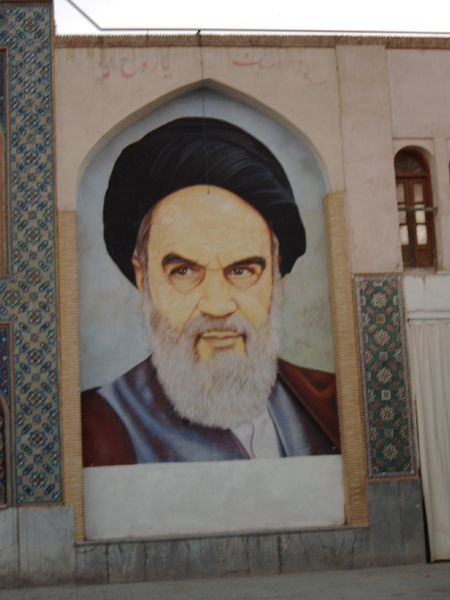
Reportedly, the CIA and MI6 toppled the Shah because he had become too much of a nationalist, like Nasser, and was not following instructions on oil.
The CIA did not want left-wing democrats taking over from the Shah as they might not be easy to control. So, reportedly, the CIA allowed the Ayatollahs to take over.
Radio Free Iran claimed that while at Qom, the Ayatollah Khomeini received a "monthly stipend from the British, and he is in constant contact with his masters, the British."
The British, Muslim Terrorism and September 11
The Shah's nationalist policies worried the CIA and MI6.
The Shah signed petroleum agreements with ENI, the Italian oil company.
The Shah pushed forward popular reforms known as the White Revolution.
Opium production was ended.
There was a nuclear programme.
The Shah seemed like a nationalist Nasser and the Anglo-Americans wanted him out.
The role of the Moslem Brotherhood and the Ayatollahs
The following is taken from http://www.redmoonrising.com/Ikhwan/BritIslam.htm
(Sources used in the article: The Biography of Dr. Mohammad Mossadegh, jebhemelli.org
Killing Hope - U.S. Military and CIA Interventions Since World War II, William Blum, 1995
MI6 - Inside the Covert World of Her Majesty's Secret Intelligence Service, Stephen Dorril, 2000)
Prior to World War II, British Intelligence cultivated ties with the Brotherhood through agent Freya Stark, the British adventurer and writer... The Muslim Brotherhood spread throughout the Muslim world and has evolved into something like a Muslim equivalent of the West's Masonic brotherhood...
"According to CIA agent Miles Copeland... the CIA began to cooperate with the Muslim Brotherhood, the Muslim mass organization founded in Egypt but with followers throughout the Arab Middle East... This signalled the beginning of an alliance between the traditional regimes and mass Islamic movements against Nasser and other secular forces." (Blum)
Prior to the British-sponsored massive public relations campaign on behalf of the Ayatollah the government of the Shah was loved by the vast majority of the population.
The Shah evolved into a nationalist:
- He bought land from the upper classes and, along with the crown's own land, sold it back cheaply to tenant farmers, allowing over one a half million people to become land owners and ending the old feudal system.
- He allowed women the right to vote, and brought an end to the wearing of the veil, which were "Westernizing" moves unwelcomed by the religious sector.
- He pushed forward on a $90 billion nuclear power program.
- He moved to shut down the lucrative opium industry that had been created during the days of British Empire control that had been running for a hundred years....
The attack on the Shah's government came through the Muslim Brotherhood and through the mullahs and ayatollahs of Iran, supported and manipulated by British Intelligence...
Source http://www.redmoonrising.com/Ikhwan/BritIslam.htm
On February 1st, 1979, two weeks after the Shah's departure, Khomeini made a triumphant return to Iran. The BBC's John Simpson was on the plane that carried him back from Paris. aangirfan: BBC links to MI6?
~~
Monday, 10 January 2011
 Oman, which sees Saudi Arabia as more dangerous than Iran.
Oman has strong ties to the West.
But it wants to be friends with Iran.
During the Iran–Iraq War, Oman remained neutral.
On 10 January 2011, we read that Oman is to increase cooperation with Iran.
(Omani King: Cooperation with Iran Boosts Regional Stability )
 Oman
Oman
The Strait of Hormuz lies between Oman and Iran.
The Strait of Hormuz, the entrance to the Persian Gulf, is a major oil shipping route.
Iran and Oman signed a security agreement in August 2009.
In August 2010, Iran and Oman signed an agreement to further boost mutual cooperation in the field of defense.
Omani by cinderea

"Even the United Arab Emirates, which is battling with Iranian leaders over the title to three Persian Gulf islands, has done little to stop billions of dollars in annual trade with Iran...
"Many people in Muscat said that they saw the ultraconservative Saudi Arabian approach to Islam as more of a danger to Omani interests, and stability, than Iranian activities in the region.
"Oman is a Muslim state, but 75 percent of the population is affiliated with a conservative sect called Ibadism. Over the years Saudi religious figures have tried to spread their more fundamentalist views in Oman."